
Back in November, I wrote about Everlane's new logo and what felt like the start of a promising new chapter. A refreshed identity, a commitment to longevity, a Laufey campaign. It all pointed to a brand finding its footing again.
And then Shein bought them.
I have a lot of thoughts.
What Everlane Was Built On
Everlane's whole identity was rooted in what they called "radical transparency." They broke down the cost of every product, named their factories, talked openly about their supply chain. In a fashion industry that runs on smoke and mirrors, that was genuinely radical. People were not just buying a t-shirt. They were buying into a belief system.
That belief system had real value. It turned customers into advocates and gave the brand a lane almost no one else was occupying. That was the deal. That was the whole thing.
And Then
Shein acquired Everlane in a deal valuing the brand at approximately $100 million, a steep discount from what it commanded at the height of the e-commerce boom. Shein is, in case anyone needs the reminder, everything Everlane stood against. Shein is accused of poor labor practices and environmental harm, and has spent years facing scrutiny from lawmakers on multiple continents. This is not a strategic partnership. This is a brand contradiction.
The Customer Reaction Says Everything
When an acquisition makes your most loyal customers rush to stockpile your products before the formula changes, that is not a great sign. People were not upset because a company sold. They were upset because it felt like a betrayal of a promise they had organized their shopping habits around.
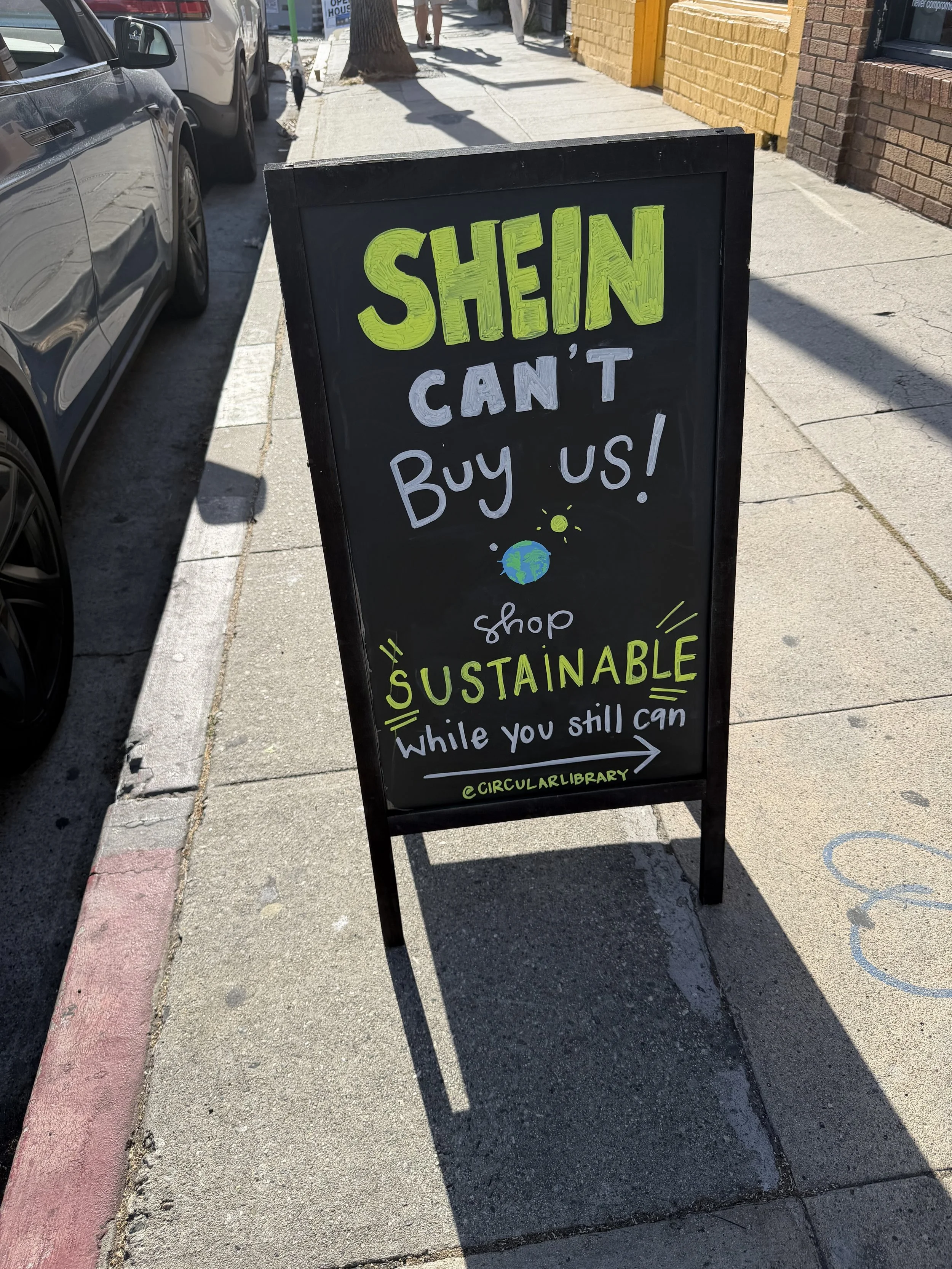
And the response from actually sustainable brands has been just as telling. Last weekend on Abbot Kinney, I walked past Circular Library and stopped dead in my tracks. Their sign out front read: "Shein can't buy us. Shop real sustainability with us." Simple, pointed, and honestly kind of perfect. That is brand clarity in real time. While Everlane issues carefully worded statements about maintaining values under new ownership, the brands that actually live those values are not missing a beat.
The Statement Did Not Help
CEO Alfred Chang promised a new era with expanded global reach and greater opportunities, and insisted Everlane would uphold its sustainability commitments. I understand why he said it. But brand trust is not rebuilt with press releases. It is rebuilt with actions over time. And right now the most visible action is Everlane choosing to align with a company whose entire model runs counter to everything they claimed to believe.
The Short of It
This is what happens when business priorities start outrunning brand values. Everlane may survive it. Stranger things have happened. But the version people loved, the one that felt honest and intentional in an industry full of noise, that one is going to be very hard to get back.
And somewhere on Abbot Kinney, a small sustainable brand with a sign in their window is doing just fine without them.
Radical transparency has a way of making radical contradictions impossible to ignore.