
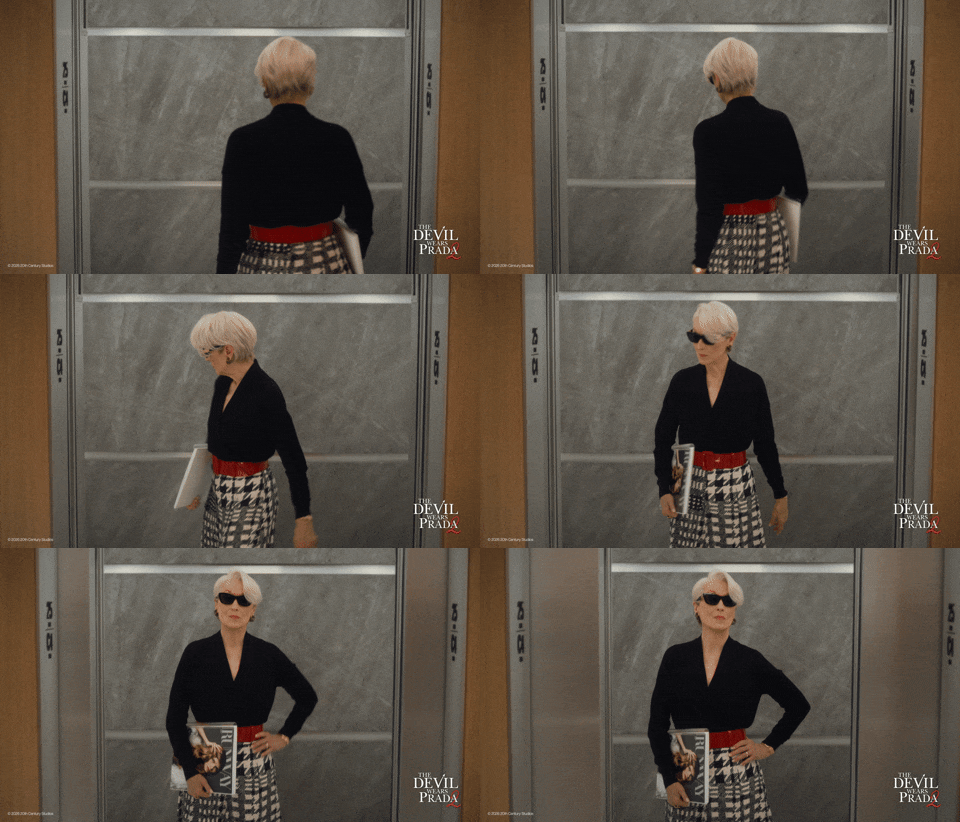
The marketing around The Devil Wears Prada 2 is a masterclass “owning it”. It’s not loud for the sake of being loud. It’s intentional. Layered. Self-aware. And most importantly, it understands exactly where fashion, media, and nostalgia intersect right now. This isn’t just a movie rollout. It’s a cultural re-entry.
The Power of Legacy
Sequels are tricky. Especially ones tied to something as iconic as The Devil Wears Prada.
The original didn’t just perform. It stuck. It shaped how an entire generation views fashion, work, ambition, and power dynamics. So the challenge isn’t awareness. It’s relevance.
What this campaign gets right is this:
They’re not trying to recreate the past. They’re reframing it for now. There’s a confidence in letting the audience come to you. No over-explaining. No forced virality. Just sharp, culturally fluent placements that say, you already know what this is.
Fashion Is the Media Channel
Instead of relying solely on traditional film marketing, the campaign leans into fashion as its distribution platform. Because that’s where this story lives.
Editorial placements
Designer collaborations
Front-row moments
Cultural cameos
It’s not promotion. It’s participation.
And that’s the shift brands should be paying attention to. The most effective campaigns don’t interrupt culture. They embed within it.
The Vogue Cover That Broke the Internet
The Vogue cover featuring Anna Wintour and Meryl Streep, shot by Annie Leibovitz, wasn’t just a press hit. It was a statement. It blurred the line between fiction and reality in a way that felt both obvious and completely genius. Because let’s be honest. Miranda Priestly has always been inspired by Anna Wintour. So instead of avoiding the comparison, the campaign leaned all the way in.
What makes this moment so powerful:
It collapses worlds
Fiction meets fashion authority. Character meets real-life counterpart. The audience is in on the reference, and that’s what makes it land.
It elevates the film beyond entertainment
This isn’t just a sequel. It’s a conversation about influence, legacy, and the evolution of power in media and fashion.
It creates instant shareability without trying too hard
No gimmicks. No trends. Just iconic talent, shot beautifully, in the right cultural context.
That’s what people actually want to share.
Nostalgia, But Make It Intelligent
A lot of brands rely on nostalgia as a shortcut. This campaign uses it as a foundation. It respects the original audience while acknowledging how much has changed:
The fashion industry
Media power structures
The way we talk about work, ambition, and identity
It’s not “remember this?” It’s “look how far this has come.” That’s a very different, and much more compelling, story.
The Short of it
Culture beats channels
Stop asking “where should this live?” Start asking “where does this naturally belong?”
Iconic doesn’t mean static
If you have legacy, evolve it. Don’t protect it so tightly that it becomes irrelevant.
The smartest campaigns trust their audience
You don’t need to spell everything out. In fact, you shouldn’t.
The best marketing doesn’t feel like marketing
It feels like something you’d talk about anyway.
The Devil Wears Prada 2 campaign works because it understands something simple but often overlooked: Relevance isn’t created. It’s recognized. And when you get that right, you don’t have to chase attention. It comes to you.